
One of the most famous shots from Steven Spielberg’s Close Encounters of the Third Kind (1977) depicts a little boy standing in a doorway gazing into space illuminated by the glow of a spaceship. The iconic frame,1 which was featured years after on the cover of the film’s anniversary DVD release, prompts questions about the nature of the child gaze. What does little Barry actually see when standing in an open doorway (Figure 1)? How does he perceive the unearthly light? It is significant that we don’t see his face in this scene—the child gaze is hidden from us and seems mysterious, as well as inaccessible. It couldn’t be otherwise. After all, films about and for children are made by adults. Although, as Cary Bazalgette and David Buckingham remind us, childhood “is a world we have all visited, it has become inaccessible to us except through the distortions of memory” (1995, 1).
Figure 1
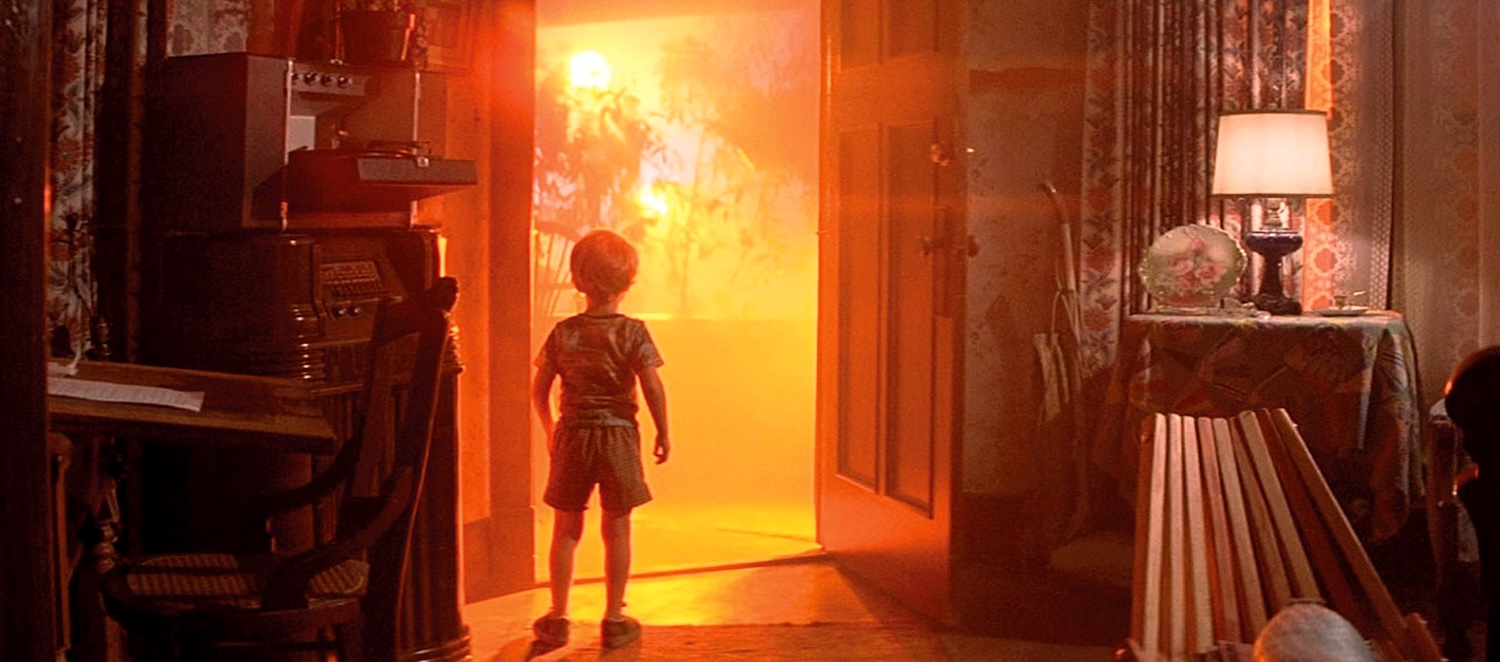
Close Encounters of the Third Kind, Barry stands in the open doorway (51:24).
© EMI Films / Columbia Pictures
Over the past thirty years, this inaccessible child gaze has become an important issue in the field of children’s studies. In film theory, it has been around even longer, although—with some exceptions—it has rarely received much attention. In contemporary film studies, the term child gaze functions similarly to the concepts of male gaze or female gaze. It is considered a particular mode of representation for which the primary opposition is the adult gaze. Interestingly, scholars dealing with this phenomenon generally look for traces of the child gaze outside Hollywood cinema, usually separating reflections on the American family film from the European (but also, for example, the Middle Eastern) children’s film.2
In our paper, we take a different perspective. We believe that the child gaze can be found in such mainstream productions as the films of Steven Spielberg or Chris Columbus. Starting from this assumption, we will consider whether John Williams’s music in these films reflects a tendency to show the world from a child’s perspective and helps to reinforce it. Although such a topic naturally raises questions about the specifics of child’s hearing, we will not pursue this thread in this article. Child’s hearing has not yet been discussed in film studies, and the films we will be looking at here only replicate children’s perception in a limited way. Therefore, we will focus on analyzing selected scenes with Williams’s music and their structural and affective dimensions (primary and secondary musical parameters, according to the terminology of Leonard B. Meyer). We will ask whether such emotions as curiosity, surprise, astonishment, and delight, typical of children’s view of the world,3 are reflected in Williams’s music—in its colors, dynamics, tempo, instrumentation, harmony, and musical space. We will therefore look first at the concept of the child gaze and its place in film theory, and then identify four areas where, in our view, Williams’s desire to convey a child’s perspective through music is most noticeable. Picking up on these threads seems particularly important to us because of a certain lack in the field of film music research. Although the function of music in cinema has already been covered in quite some detail in several publications (Audissino 2017; Donnelly 2001; Wierzbicki 2009), there are still few in-depth studies on its role in films for and about children.
The Child Gaze in Film Theory
An excerpt from an essay by Béla Balázs published in 1924 is probably one of the first theoretical film commentaries related to the child gaze:
The poetry of ordinary life that constitutes the substance of good films is more easily visible from the closer perspective of little people […]. They know more about the little moments of life because they still have time to dwell on them. Children see the world in close-up. […] Only children at play gaze pensively at minor details. (Balázs 2011, 62)
In subsequent years, the theme of the child’s perspective and its influence on film aesthetics was taken up by prominent critics and theorists, including André Bazin, Edgar Morin, and Gilles Deleuze. Their concepts, although extremely important for the development of film studies, did not, however, reflect the problem of child subjectivity as such. They were not focused on the issue of choosing those means of cinematic expression that would let the child’s voice be heard. The child’s perspective served as a certain model of perception. By adapting this model, cinema could free itself from any conventions and look at the world—and at itself—from a different point of view. This is what Bazin ([1949] 1997, 124) and Deleuze, who continued his reflections years later, seem to have in mind when they write about the role of the child in neo-realism: “The role of the child in neo-realism has been pointed out […]; this is because, in the adult world, the child is affected by a certain motor helplessness, but one which makes him all the more capable of seeing and hearing” (Deleuze [1985] 1989, 3). While Bazin and Deleuze associate the child gaze with realism, for Morin it is similar to magical thinking: “Thus magic appears to us: a vision of life and a vision of death, common to the infantile part of archaic peoples’ vision of the world and the childish part of modern peoples’ vision of the world, and to neuroses and psychological regressions like the dream” ([1956] 2005, 76).
What these concepts have in common is the conviction that the child’s view is somehow unconventional, non-standard, and different from the dominant mode of perceiving reality. Some authors, however, have argued that the notion of the child and childhood is not a universal one, but varies according to time, culture,4 and ideological context.5 Others have pointed out that it is a gross oversimplification to assume that—by imitating a child’s perspective—cinema can return to an unformed, “innocent” perception of the world (Helman 2013, 25). Moreover, in the classic “theoretical discussions of the child in film, there is […] a strong focus on the adult spectator’s desires, responses and feelings in relation to the on-screen child” (Martin 2019, 3). After all, as Deborah Martin points out, “For both Bazin and Balázs, the act of watching the child on screen is a means of recapturing something: ‘paradise lost’ (Balázs) or ‘the innocence, awkwardness and naiveté we lost’ (Bazin). In this sense, both theorists hint that what the child fulfils for the adult spectator is also the desire to return to the child self, to re-inhabit that self, or to recapture the past” (Martin 2019, 5).
In recent film studies, particularly in those areas where it meets children’s studies, the child gaze is understood differently. The primary point of reference in this research is no longer film aesthetics, but the question of the politics of representation.6 The child’s perspective is thus reflected upon, for example, in audience studies (Bazalgette and Buckingham 1995; Beeler and Beeler 2015), or in analyzing discourses of power. After all, as Bazalgette and Buckingham point out, “definitions of childhood and adulthood will always express the power-differential between children and adults. The texts produced by adults for children […] are inevitably bound up in these power relationships” (1995, 5). Deborah Martin, in turn, speaks of “the adult’s colonisation of the child-figure, the mastery of the viewer-subject as opposed to the colonized object of the gaze, a relationship which, of course, reflects the social positioning of these groups” (2019, 4).
Karen Lury argues that the cinematic gaze can be a vehicle for codes of power. In her opinion, the fundamental difference between the child’s and the adult’s perception of reality is expressed in the opposition of the terms showing and seeing:
Seeing implies certain qualities and a particular response: it is an unregulated gaze, timeless and ahistorical, it also implies fascination and a sense in which effects (what is seen) are closer to affect (what is felt). “Seeing” is the “oooh!” of wonder at fireworks in the night or the absorbed but pointless gaze which follows ants and beetles as they labour in the grass, returns again and again to the scab on your knee, explores cloudy breath on a windowpane. “Showing”, in contrast, is precisely not this, but is a directed gaze, purposeful; it is also historical, part of a narrative which links cause to effect, it demonstrates, names and classifies. (Lury 2005, 308)
The child sees, and the adult shows. Elliott, the protagonist of Steven Spielberg’s E.T. The Extra-Terrestrial (1982), seems to know this very well when he introduces the alien into his world. While showing his new friend various objects and explaining their use, the boy continually and nervously asks: “See?”. He’s clearly not entirely comfortable with the position of a “demonstrator,” normally reserved for adults.
In Lury’s opinion, “the ‘trick’ of cinema is that it presents ‘showing’ as ‘seeing’. Seeing is what children do; showing is what adults do for children” (2005, 309). Sometimes, however, “The child’s presence and the child’s actions […] may serve to remind us of this ‘trick’ of cinema, and often interrupt the controlling discourse of the film’s showing by recalling the pleasures and fears of seeing” (Lury 2005, 309). It also happens that the filmmakers themselves try to withdraw from the ‘showing’ position to make room for the ‘seeing’, abandoning (partly or entirely) the adult gaze in favor of the child gaze. Such a perspective doesn’t necessarily lead to a radical change in aesthetics and a complete abandonment of mainstream cinema. The spectrum of possibilities is vast. The construction of the child gaze in cinema may involve the use of the character’s point of view, the positioning of the camera at the eye level of a child, the use of a large number of close-ups (Wilson 2005, 329–340), or introducing music “for emotion rather than drama” (Bazalgette and Staples 1995, 102). The use of space is also significant (Kuhn 2010, 82–98): in films emphasizing the child’s perspective, the number of locations is generally limited, with color and light playing an important role in their presentation (Kostyra 2022, 147–150). Most of the critics and academics writing about such strategies focus their attention on non-Hollywood children’s films, mainly European, Iranian, Chinese or Latin American.7 The works of Steven Spielberg or Chris Columbus are rarely considered in this context. We think, however, that they should be, because, as Becky Parry points out, E.T., for example, “[…] was innovative in its use of shots, at the height of the child actors, which enabled the director to maintain adherence to the child’s point of view throughout” (2013, 16). Of course, it is significant that this “child’s point of view” in most of the films we will be discussing is essentially a boy’s point of view. Except for “short-sighted” [sic] Sophie from The BFG (Steven Spielberg, 2016), who nevertheless possesses the characteristics of a typical “bookworm”, the protagonists of these works are small, young, or adolescent men. Girls of different ages and—as in E.T.—characters of only presumed gender, who accompany boys, usually can’t be considered equal partners in their adventures. This interesting ideological motif will be left to the margins of our deliberations at this point, as we will focus on the child perspective in general. We believe that an integral component of its construction in the films of Spielberg or Columbus is John Williams’s music, which goes in line with Kathryn Kalinak’s reflections on the importance of music to the emotional experience in classical narrative movies (1992, 87). How the music corresponds to the idea of a child gaze is most easily captured in four complementary strategies: nostalgic connecting, reacting, reducing, and coloring.
Nostalgic Connecting
The nostalgic dimension of Steven Spielberg’s cinema has been pointed out many times before, also in the context of those of his works that can be categorized as family films (Brown 2017, 53–55).8 These films contain many references to classical adventure cinema or popular television shows.9 At the same time, they offer a kind of game with the expectations of a viewer, familiar with the genre conventions and narrative patterns. The nostalgic dimension of these works relies on two different spheres: that of references to already known (and loved) audiovisual texts and that of the idealized vision of childhood seen as a time of innocence, adventure, true friendship, etc. The subject of this nostalgia10 is, of course, the adult—both the creator and the viewer—who is given the opportunity to return to their carefree years. Unsurprisingly, the music in these films also contains more or less direct references to the classics11—to both art music classics and Williams’s own, in a way already classic, soundtracks (especially his sonically illustrated vision of childhood). In the first case, most often, we can talk about references to classical music reminiscent of specific sounds of the nineteenth and twentieth-century compositions. These include, for example, references to the sound climate, instrumentation and character of Tchaikovsky’s or Prokofiev’s music (heard in Home Alone [Chris Columbus, 1990]), to the works of Stravinsky12 or Debussy13 (in E.T.). In turn, Close Encounters of the Third Kind begins with a sound that may resemble the music of Ligeti or Penderecki. The sonic atmosphere created in this way precedes the appearance of a five-note motif essential for the film’s plot. However, Williams’s music also contains clear reminiscences or quotations of culturally recognizable compositions. In The BFG, for example, the British monarchy is portrayed through bombastic music (in which horns and military snare drums play a considerable role) constituting a kind of echo of the (supposedly?) much-loved by the British, Symphony from the New World by Anton Dvořák. In Empire of the Sun (Steven Spielberg, 1987), Chopin’s Mazurka Op. 17 No. 4 resounds literally, and its stunning performance reminds Jim—the protagonist—of his mother, who used to play that piece on the home piano during his happy childhood years. And the main theme from the Harry Potter films is a kind of paraphrase of the Sicilienne theme from Gabriel Fauré’s ballet Pelléas et Mélisande.
In particular, many references to classical scores and techniques used in art music in the 20th century can be found in A.I. Artificial Intelligence (Steven Spielberg, 2001). It is known that the film was initially intended to be directed by Stanley Kubrick, so the musical allusions Williams uses are expressive, unambiguous in intent, and of a particular kind. Thus, we find references to the orchestral Atmosphères by György Ligeti,14 Aram Khachaturian’s ballet Gayane,15 and Richard Strauss’s waltz from the opera Der Rosenkavalier.16 Throughout this score, Williams repeatedly reaches for the atonal system and electronics (referencing Ligeti-style modernist vocalizations) and minimalism in the style of Steve Reich and John Adams.
The music composed by Williams for Home Alone also contains several exciting references that allow the story of a resolute eight-year-old from Chicago to be nostalgically inserted into the long tradition of Christmas stories in which children play a central role. As is well known, for this particular film, Williams was asked to compose music along the lines of the works of Sergei Prokofiev—a master of compositions intended for a children’s audience (Vernazza 1984, 36–37; Cazden 1954, 52–74; Klein 2014). Williams’s film score thus consciously references, as already stated, recognizable passages from two ballets: Tchaikovsky’s The Nutcracker17 and Prokofiev’s Peter and the Wolf.18 However, these evocations are woven into the dense fabric of Williams’s own music (along with the author’s charming Christmas song Somewhere In My Memory, for children’s choir and orchestra) and many traditional carols: Jingle Bells, O Come All Ye Faithful, The First Noel, Joy to the World, Deck the Halls, Hark the Herald Angels Sing, It Came Upon a Midnight Clear and We Wish You a Merry Christmas. In Home Alone, in a particularly appealing and satisfying way, Williams’s derivative and authorial music together create the innocent world of a child and the warm, almost magical aura of Christmas.
Williams also references his own scores. For instance, The BFG is stylistically reminiscent of the scores of such earlier films as The Adventures of Tintin (Steven Spielberg, 2011), War Horse (Steven Spielberg, 2011), Harry Potter and the Prisoner of Azkaban (Alfonso Cuarón, 2004), Home Alone and E.T. However, the musical score of The BFG is by no means purely reproductive, derivative, or based on borrowing. By using a recognizable range of musical means, such as delicate melody in flute with the accompaniment of piano, orchestration including softness of the strings, harp and celesta, tonal harmonies, regularity, warm color of the middle and high register, the composer creates a friendly, intimate, warm, and charming atmosphere in his original score, particularly in the moments when Sophie feels safe.
Williams, therefore, does not shy away from sounds, sonorities and melodies that are unambiguously connoted and recognizable in high and pop culture. He reaches for them intentionally, in a thoughtful and sophisticated way. For example, in Home Alone he interweaves the tunes of traditional Christmas carols and of Dies irae sequence with the carols he created, to reinforce the meaning of movie’s narrative. The sound characteristics associated in classical music with various emotional states and dramatic situations became a point of reference in the process of his compositional invention. Taking his cue from the classics and the associations developed from them, Williams creates his works of art: music through which he establishes a perfect connection with his audience by referring to their best memories. The nostalgic connecting becomes an additional advantage of his music.
Since, as we have already stated, these references aim to awaken nostalgic feelings for childhood in the adult viewer, can they be linked in any way to the concept of the child gaze? We believe that, on the one hand, they act as a framework, indicating important points of reference allowing us to identify E.T., Home Alone, or The BFG as cultural texts belonging to “children’s worlds,” and, on the other hand, they constitute a first step towards the transition from the adult gaze towards the child gaze. Another step is the way Williams’s music resonates with the reaction shots contained in these films.
Reacting
Children’s film theorists consider reaction shots as a cinematic device that doesn’t embrace a child’s perspective, although it emphasizes the emotional value of a scene. Cary Bazalgette and Terry Staples describe the mechanism as follows: “The commonest use of a reaction shot in American cinema is to show a facial expression changing, and thus to emphasize a narrative point. […] The more dramatically significant the moment, the more reaction shots will be used, allowing time for all the implications to sink in (both to the characters and the audience)” (1995, 101). We are all familiar with these types of shots from Spielberg’s or Columbus’s films: they appear when characters gaze in wonder and awe at spaceships in Close Encounters of the Third Kind and E.T., they accompany the scenes of the new students arriving at Hogwarts or the many moments in which Kevin McCallister confronts his fears of being home alone. The way Bazalgette and Staples write about reaction shots suggests that this kind of shot should be considered as a part of showing rather than seeing strategy, as it aims to show a reaction appropriate to the situation presented in the film. However, a closer look at these types of shots in Spielberg’s or Columbus’s films does not allow such conclusions to be drawn. In Spielberg’s films, alongside the classic reaction shots, there are interesting shots in which the children’s faces, viewed in close-up, are only partially illuminated—so that it is mainly their eyes that are visible. As in the aforementioned frame from Close Encounters of the Third Kind, the child gaze seems to be the main topic of these shots. The consistency with which these types of shots recur in the director’s works, from E.T. to A.I., can be seen as proof of the director’s conviction that facial shots are extremely important in the film. In Columbus’s Home Alone and Home Alone 2: Lost in New York (1992), on the other hand, the large number of reaction shots in which we observe Kevin’s astonishment or fright as he opens his eyes and mouth wide (Figure 2), have an almost parodic, cartoonish effect, especially as reactions of this type often accompany situations that are by no means dramatic, but rather banal, such as meeting a neighbor or being in the bathroom.
Figure 2
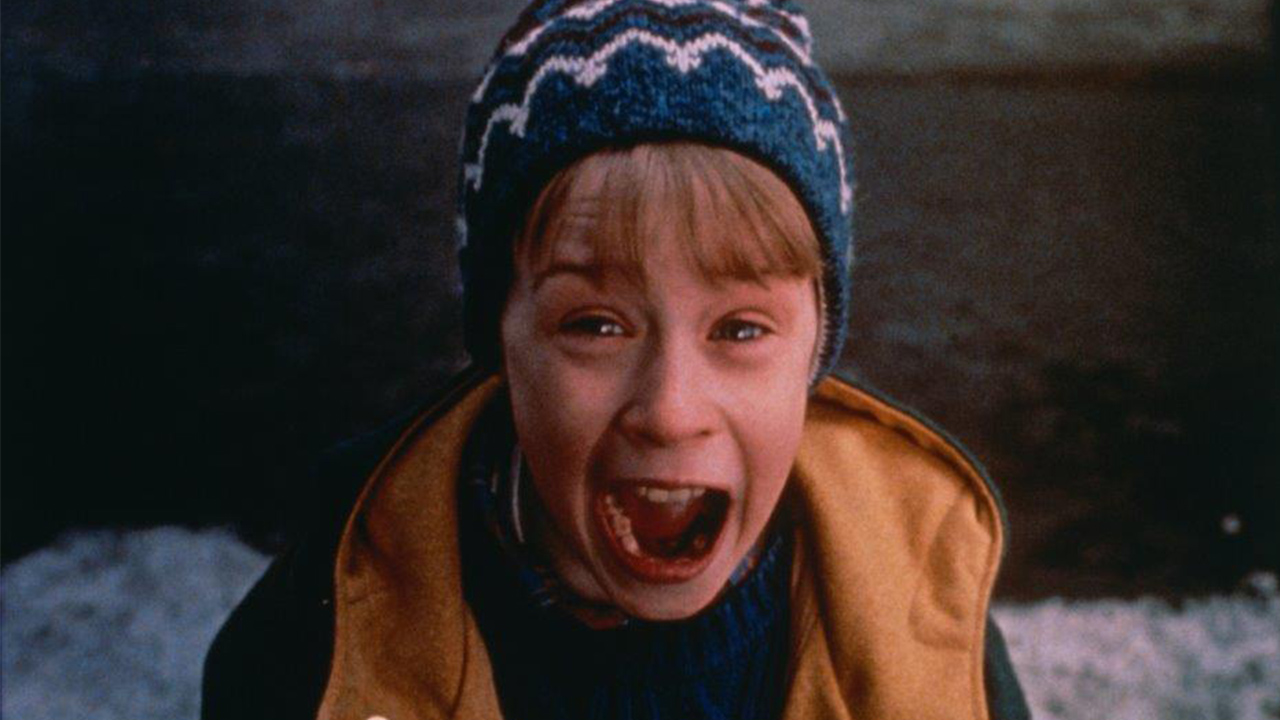
Home Alone 2: Lost in New York, Kevin screams when he sees Harry and Marv (51:05).
© Twentieth Century Fox
Since, as Karen Lury writes, “‘Seeing’ is the ‘oooh!’ of wonder at fireworks in the night,” the presence of such shots is a desired illustration of a child’s experience in Spielberg’s films, whose themes are often wonder and awe. What is more, reaction shots of this kind aren’t restricted to the young protagonists of the films; they also involve adult protagonists: palaeontologists observing dinosaurs walking through Jurassic Park (Jurassic Park, 1993), representatives of government agencies observing the arrival of aliens in Close Encounters of the Third Kind or the now-adult Peter Pan returning to Neverland after many years (Hook, 1991). The reaction of the protagonists of these films to unusual situations is not very different from the childish “oooh!” of wonder at fireworks in the night, suggesting that the essence of Spielberg’s reaction shots is not so much showing as seeing. Therefore, shots of this type signal the possibility of a perspective other than the rational and targeted adult gaze. This is suggested by the opening of Hook, in which we observe the faces of children attentively following the play about Peter Pan. The reaction shots used here seem to encourage a change of perspective, choosing a child’s point of view—which is exactly what Peter will have to do in the course of the action.
Williams’s music, accompanying reaction shots, proves that the composer adopts—for the films—a child’s perspective. After all, it should be remembered that for a child viewer, feelings are the most important. Therefore, music has a vital role to play: subordinated to the plot, illustrating the events unfolding on set, it should enhance their emotional, expressive dimension. Williams’s music meets such requirements perfectly. It heightens the emotions experienced by the child and adds sound to what could not be expressed otherwise. For example, in Home Alone in the scene of Kevin’s mother return the melody “Somewhere in My Memory” resounds at first softly, gently, and then, when the protagonist notices his mother’s presence and rejoices at it, the music gains momentum, instrumental richness and sonic energy (Clip 1) E.T. Elliott’s surprise and a certain fear at seeing E.T. for the first time supports the music with somewhat frightening effects of increased glissandos and string tremolos in very high registers (Clip 2). Just as a child’s world is devoid of ambiguity or understatement and it is sometimes sketched in black and white tones (goodness pleases and encourages participation, while evil scares and forces one to flee), so Williams’s music leaves no room for ambiguity as to the positive or negative message of a particular film scene. The appropriate choice of key, which is very idiomatic, also supports the clarity and unambiguity of the message—the major key emphasizes joy; the minor key emphasizes sadness and loss (e.g., in the scene when E.T. goes away). And the use of the redundant Mickey-Mousing effect is fully justified from this point of view. We can find another example in Home Alone, when “The Burglar’s Theme” exploring a minor chord is contrasted with the main theme (“Somewhere in My Memory”)—associated with Kevin—based on major chord (Clip 3; see Lehman [2020] 2022).
Clip 1
Home Alone, Kevin gets together with his family (01:35:08).
Credits: © Twentieth Century Fox / Hughes Entertainment / Walt Disney Studios
Permalink: https://vimeo.com/1158755795
Clip 2
Credits: © Universal Pictures / Amblin Entertainment
Permalink: https://vimeo.com/1158755819
Clip 3
Home Alone, attack on the house, soundtrack only (01:22:01)
Credits: © Twentieth Century Fox / Hughes Entertainment / Walt Disney Studios
Permalink: https://vimeo.com/1158755869
An excellent example of the musical enhancement of a protagonist reaction depicted on screen is found in several scenes from Home Alone, quoting the medieval Dies irae sequence. This iconic melody, taken from classical music, suggesting horror (because it is connotated with death, the day of wrath, destruction, and the Last Judgement) always resounds in the film with the appearance of Marley, an ominous-looking neighbor (the horror of the Dies irae motif is intensified by the sound of tubular bells). Meeting him “face to face” forces Kevin to escape immediately. Interestingly, however, Marley’s transformation from fearful neighbor to kindly older man—which takes place during a meeting in a church against the background of the carol O Holy Night—is accompanied by a symbolic transformation of the Dies irae motif into the old Ukrainian song Carol of the Bells, composed of repeated ostinato motifs derived precisely from the Dies irae sequence.19
In A.I. Artificial Intelligence Williams’s music amplifies the perceptual response to an even higher level. Clearly, it balances between extremes: the world of humans and the world of artificial intelligence, as the film script intends. The sonic aura created by Williams is at times warm, intimate and personal (e.g. the cantilena theme of Monica in “For Always” or the borrowing from Strauss’s opera) and at other times downright cold, distanced (electronics, atonality or Ligeti-style modernism). It leaves no illusion that the worlds that meet are emotionally different; the sound sphere unambiguously emphasizes and highlights the mutual incompatibility of their dimensions. In this way—following the idea of reaction shots—John Williams’s music builds a space of emotional identification with the (especially, but not only) childlike characters. Another strategy—reducing—strengthens this effect on a perceptual level.
Reducing
According to the logic of the child gaze, the space in the film should be shown from an appropriate point of view (situated at the eye level of a non-adult); only then will it appear authentic. This rule is consistently applied by Chris Columbus in Home Alone, where in dialogue scenes the camera adopts an alternating point of view: it looks at Kevin from above, and at his adult interlocutors from below. Also, its vision is often limited to what the child can see in a given situation, for example: while hiding under a bed or observing something from the hall stairs. A child’s perspective, however, is linked not only to the specific place of the viewer but also to a change of scale, as it is suggested in Home Alone’s intro, in which the image of the house shrinks. What might look like an imbalance of proportions from an adult’s perspective, may appear quite natural from a child’s point of view—just as for Sophie from The BFG (Figure 3) it is natural to be very tiny, almost invisible in the giant’s house—after all, to the adults in her everyday world, she is also tiny and almost invisible too, albeit in a more metaphorical sense. At the same time, in films that use a childlike perspective, it is the small things that are valued: Jim, the protagonist of The Empire of the Sun, seems fascinated by elements such as someone’s footprints or handprints, while in Close Encounters of the Third Kind, taking the perspective of little Barry, the camera focuses on the toys and trinkets scattered around the child’s room.20
Figure 3
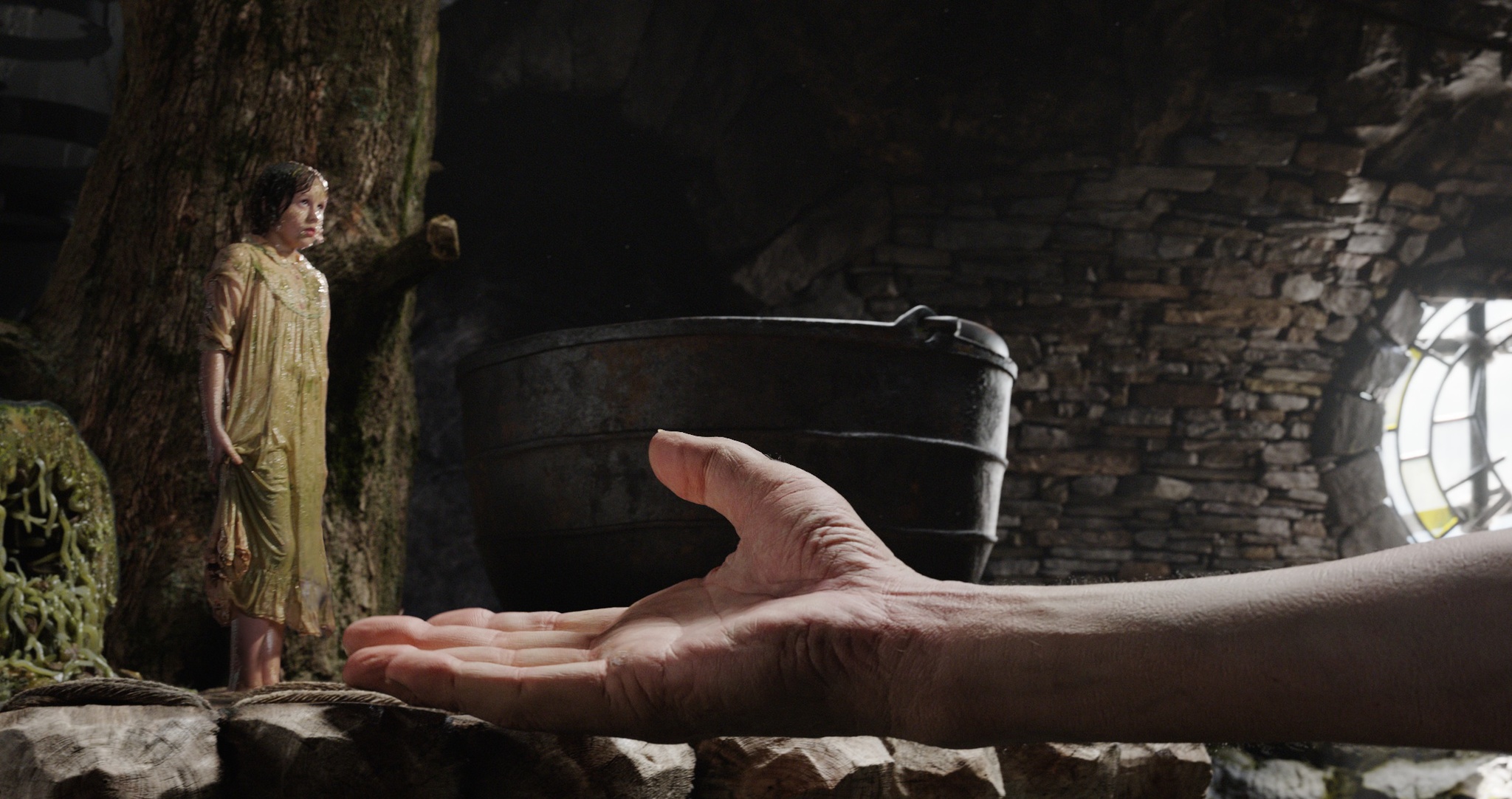
The BFG, Sophie gets out of the snozzcumber (28:56).
© Walt Disney Pictures
In films exposing the child gaze, the number of locations is fundamentally reduced to the spaces in which the kids most often function: the house, with heavily exposed children’s bedroom and, for example, the garages serving as a “base” for meetings with friends, school, playgrounds and other places where the kids gather.21 The maps of these children’s worlds are not precise—they are more like sketches of treasure islands with a few clearly defined points than cartographic studies. Elliott in E.T., for example, doesn’t know how to get to the playground at his sister’s nursery (because his mum always drove him there), Sophie in The BFG has only a vague idea of what London looks like (it seems that—apart from the view from the orphanage window—she recognizes only emblematic places such as Buckingham Palace), and in Hook all that is known about getting to Neverland is that you have to head for the “second star on the right and straight on ‘till morning” (see McCaulley 2019).
The reduction in the number of action locations can be linked to Williams’s characteristic strategy of reducing the number of musical themes and thoughtfully manipulating the most important ones. Although in each of the films for which Williams’s music provides musical support, there are several melodically and sonically recognizable themes (e.g. in Home Alone there are five, in Close Encounters of the Third Kind—six, and in E.T. as many as nine), one most important (basic), clearly outlined motif characterizing the protagonist always comes to the fore. This completes the specific information about the main character’s personality and adds what could not be otherwise expressed visually or verbally. This is the case, for example, in E.T. or The BFG, where the main characters are unambiguously defined sonically and the choice of motif and its instrumentation reveals the deeper qualities of their personality. We have in mind here, in particular, the solo, delicate piccolo flute theme, which tells the viewer a lot about the feeling of loneliness of the tiny protagonist—E.T.—and his desire to find his family (see, for example, Clip 2 [00:01–02:35]). On the other hand, Sophie’s six-note theme from The BFG is a charming ascending melody, revealing such features of the little heroine as delight in the world and childhood curiosity, lined with a hint of melancholy.
It is worth emphasizing that the most important musical themes recur frequently in Williams’s film score, being subjected to various changes and transformations. Depending on the visual narrative, they take on dramatic or playful qualities. An example is “Sophie’s Theme” from The BFG, which is clearly marked at the beginning of the film and becomes memorable for the viewer. Later, it accompanies Sophie’s adventures among the Giants, illustrates her developing friendship with the BFG (taking on the character of a gentle, delicate lullaby), or serves as a thoughtful and unsettling canvas for “Sophie’s Future”, supported by the sounds of flute and harp. In Williams’s music, the recurrence of themes thus finds its justification in content and narrative layers. At certain moments, they even acquire an impressionistic sonic flavor, undefined and yet evocative. They create a saturated, warm, profound ambient background aura (e.g., the meeting of Elliott and E.T. or the developing friendship between Sophie and the BFG). Even if—as in the case of E.T.—there are more themes (nine), they are linked in certain groups, finding a clear justification in the plot (e.g., the five themes of Elliott and E.T.’s developing friendship or the three themes of the antagonists). Moreover, the nature of the sonic background and the strategy of motivic transformations of the main theme clearly complement the other narrative levels and reveal them to the viewer (and, by interacting with the visual message, reinforce it).22 Thanks to the music, we learn—more and better—about the drama of the experiences, the emotions accompanying the adventures, the defeats suffered, and the disappointments experienced; we also get a fuller taste of victory. At the same time, Williams uses a limited number of themes to facilitate communication with the viewer. The latter, over time, recognizes the theme assigned to the protagonist and follows its transformation.
In the procedure of repeatedly transforming the themes, Williams once again reveals his acquired musical background and demonstrates his skill as a composer-symphonist. Of course, these features of his musical technique are typical for his entire oeuvre, not only of the soundtrack discussed here, but in the latter, they work brilliantly, reinforcing the intensiveness of the musical message. After all, the ability to use leitmotifs (whether in the form of extended themes or only in the form of sound signatures) stems precisely from the tradition of classical music and found its special crowning touch—transferred over time to the practice of film music—in the works of Richard Wagner. As we will see in the next section, the transformation of these leitmotifs plays a key role in films that exhibit the child gaze.
Coloring
Color and light play a fundamental role in a child’s experience of space (Day and Midjber 2007, 5–8). In his films, Spielberg has always tried to transcribe that phenomenon onscreen, among other things, in a whole series of techniques designed to make Elliott’s house in E.T. look exactly as it might be perceived by a kid. During the shooting of the film, particular attention was paid to the source, intensity, and color of the light entering the protagonist’s room. For instance, the house where Elliott hides the little alien looks different depending on the time of day (Figure 4).
Figure 4
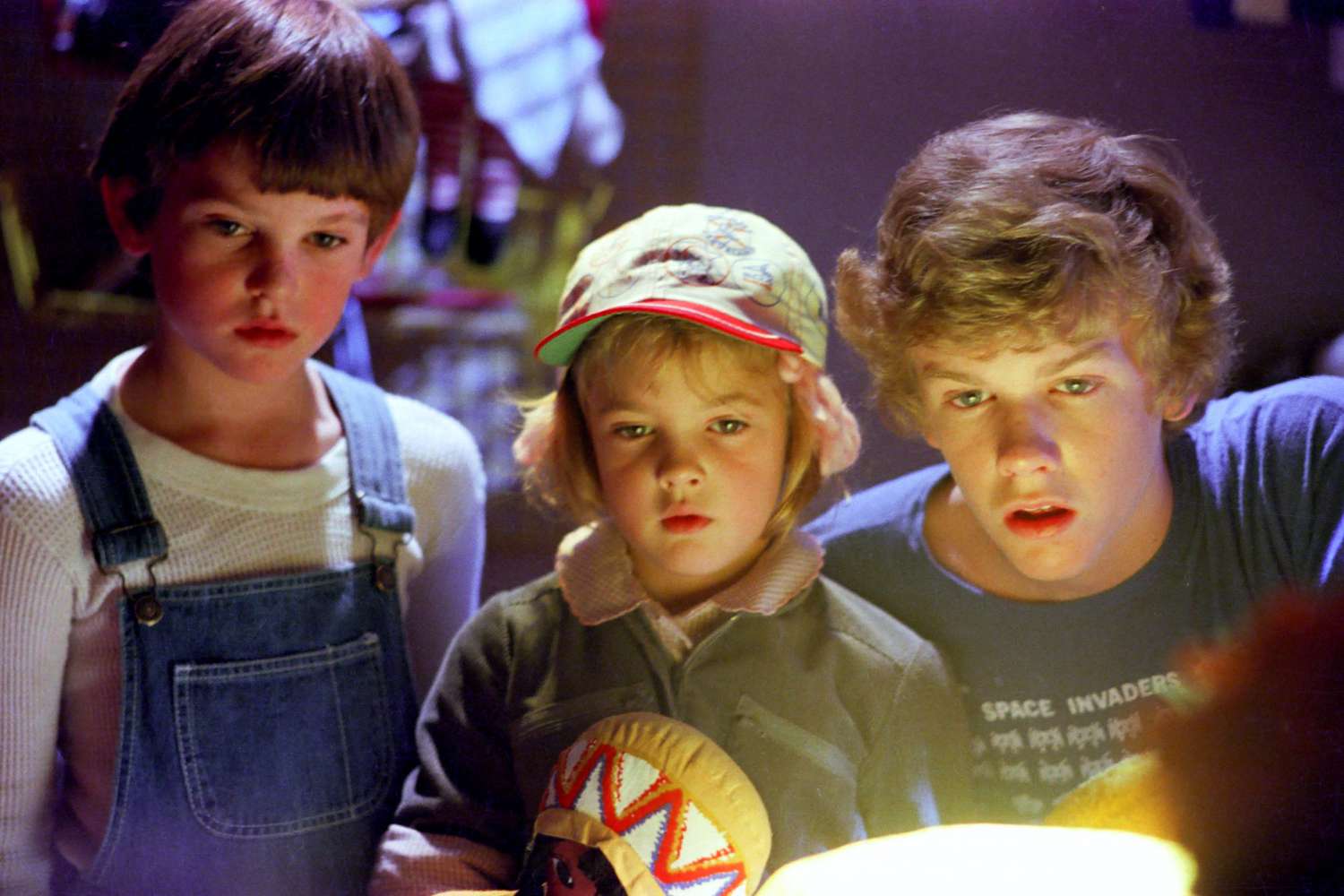
E.T. the Extra-Terrestrial, Michael and Gertie discover E.T. in Elliott’s closet (36:10).
© Universal Pictures / Amblin Entertainment
A child’s sensitivity to color and light gives an unusual look and atmosphere to the orphanage in The BFG where Sophie wanders while everyone else sleeps, and to the room from which Captain Hook kidnaps Peter Pan’s children. Also, the house of David’s foster parents in A.I. undergoes a visual transformation under the influence of light. Its colors strongly correspond to the temperature of the characters’ emotions—cooler colors appear when Monica has doubts about having an android child; and in the finale, when David finally spends a whole day with his mother, the light is much softer and the colors warmer. The strategy used by Spielberg for the composition of space finds an equivalent in Williams’s music. Indeed, Williams emphasizes the color of the image with changing texture and supports the composition of space with musical elements that bring out the various sound planes.
It is worth recalling at this point the distinction—proposed by Leonard B. Meyer (1956 and 1989) in relation to music—into its primary parameters and secondary parameters. The primary parameters are elements typical of and dominant in the music of the classical period, i.e., the form, harmony, and syntax of a musical work. In turn, secondary parameters—i.e., dynamics, agogics, and expression—characterize the sound utterances of nineteenth century Romanticism. Their use becomes crucial in realizing the Romantic ideal of musical communication achieved, among other things, through the handling of leitmotifs.
If we apply the optics of primary and secondary parameters to a child’s perspective of world perception, the latter’s priority is evident. In an adult’s romanticized view of childhood, communication according to romantic principles, emphasizing emotions, is paramount (Halberstadt et al. 2013, 93–128). Although sometimes disrupted by unexpected twists and turns, the linear narrative must be supported by dynamic, agogic, and expressive contrasts. This is why Williams builds his musical world—about children and aimed at a young audience—with particular use of secondary parameters. He uses well-considered, specifically selected instrumentation such as: celeste, xylophone, glockenspiel, harps, strings or woodwinds (with articulation precisely assigned to the individual instruments). The main themes of protagonists such as Kevin, E.T. or Sophie are simple, catching, melodious, mainly based on the major mode and diatonic scale, built on single phrases of spread chords of harmonic triads, contrasted sometimes with the steps of seconds going in opposite directions. Williams’s sound narrative is further colored by varied, contrasting dynamics, contrasting agogics, and (sometimes exaggerated) expressions. And again, these features of Williams’s musical style are typical for all his music, but in the case of soundtracks for childhood’s films they effectively enhance the narrative function.
At the same time, Williams’s music participates in the process of transforming space into Crazyspace, typical for many family and children’s films. According to Máire Messenger Davies and Karen Lury,
[Crazyspace] is a space in which children are active and frequently “impossible” […] either because they exceed the bounds of realism (in that events are magical or simply implausible) or because they behave in ways that are apparently irrational, “crazy”—at least from the adult’s point of view. Significantly, Crazyspace takes place to one side of, or even “inside”, the adult world (whether this is the spare bedroom, or in bulging trouser pockets illicitly stuffed with food). It is therefore often a space which the adult recognizes, knows and even owns, but its meaning and its “use” is determined by the child. (Lury 2005, 312)23
This process is perfectly evident in Empire of the Sun, when Jim returns to his abandoned house, where—still not fully aware of the horror of the war events—he spends his time, among other things, cycling around the domestic premises. Crazyspace in Spielberg’s film has a decidedly dark and disturbing dimension, unlike Chris Columbus’s Home Alone, in which the McCallisters’ home is being transformed every now and again by the stranded Kevin. Depending on the circumstances and needs, it can either be a space where all the rules are broken (Kevin, jumping on his parents’ bed, scatters popcorn), or the scene where a supposed party is staged to convince nearby thieves that the house is guarded, or the fortress that Kevin defends with the means at his disposal: toys, cutlery, tools belonging to his father, and firecrackers stolen from his elder brother’s room.
The childlike activity in the creation of Crazyspace translates in Williams’s music in his simultaneous use, at selected moments in the film score, of all the previously mentioned techniques of handling musical matter. To emphasize the cinematic Crazyspace, Williams superimposes various motifs and themes—along with their transformations, contrasts sound plans, harnessing the multiple sounds of instruments, the entire scale of dynamics, and articulation. And all this happens simultaneously, within a short period of time, but at a frenetic pace. The fantastic examples of such an overlapping of themes and operating them like a child’s Crazyspace are given by David McCaulley in his score reduction and analysis of E.T. movie (2018a) and of Home Alone (2018b). So Williams once again takes a child’s perspective and identifies with it so that the film’s viewer also feels captured by the ingenuity and peculiar “madness” of the characters in the story. Williams’s music, thus, becomes a Crazyspace area, where rules may or may not be followed, and where the familiar is subjected to creative treatment.
Conclusion
Williams composes music for films, often using classical music principles. He builds sound narratives using specific themes and motifs; he weaves them together; and he repeatedly evokes them, modifying the character and message of partially unchanged melodic idioms with secondary parameters. He is conscious—as in all of his musical output—of music’s ability to “carry many kinds of emotional information in its harmony, rhythm, melody, timbre, and tonality” (Cohen 2010, 902).
He also makes effective use of the Wagnerian technique of handling leitmotifs, following for example Max Steiner’s strategy but doing it according to his own idiomatic sound language. Williams’s themes are recognizable, short, and sometimes symbolic. Thanks to their multiple repetition, the (child?) viewer more easily recognizes them and unambiguously associates them with a particular character or situation.
Although Williams’s scores frequently evoke memories and sounds of well-known compositions belonging to the classical music canon or existing original soundtracks, these borrowings are no coincidence. Williams draws on familiar fragments and musical idioms precisely because they already contain culturally recognizable characterizations of certain emotional states and specific situations. It goes in line not only with Fredric Jameson’s concept of nostalgia film (1991, 286), but also with a statement by Annabel J. Cohen that “Films provide a major source for transmission of a culture’s musical conventions” (2010, 899).
Finally, the composer makes masterful use of the timbral and articulation capabilities of the individual orchestral instruments, thus demonstrating his skill as a composer trained in symphonic music. He thoughtfully selects the instrumental “actors,” creating a rich, multifaceted sound layer that is easily recognizable to his music lovers. He is, therefore, characterized by a professionalism worthy of a composer of symphonic music. Is he also the last great symphonic composer in the field of film music?
What draws particular attention is the multiplicity and variety of strategies with which, in films that expose the child gaze, Williams attempts to relate both to the child’s experience and to the culturally established vision of childhood. His music, nostalgically connected with motifs associated with a child’s perspective, operating with strategies of reducing and coloring, and referring to the principle on which reaction shots are based, does not so much bring us closer to the idea of a child’s hearing as it reinforces the sense of viewing the world from the perspective of a non-adult or one who is attempting to reconstruct such a perspective. Deborah Martin, citing Claudia Castañeda, states that “the child is constructed in modern culture as a figure of possibility and transformation, of potentiality and becoming. The child is a figure through which the adult subject experiences or imagines transformation” (2019, 6).24 This observation strongly resonates with the music composed by John Williams for all the films, in which individual themes are constantly transformed, and works by both classical composers and Williams himself are creatively invoked or quoted. As films made by adults with children in mind, the works of Spielberg and Columbus mediate between two perspectives: the nostalgic adult gaze and the meticulously reconstructed child gaze. Although many of their elements may be associated with showing rather than seeing, it is certainly possible to see in them an attempt to adopt a child’s perspective and, thus, give the child a subjective role in shaping and designing the reception of the cultural text. Accompanying these attempts, John Williams’s music harmonizes with the idea that childhood is worth revisiting and worth holding onto.