This paper aims to analyze the significance of the wall erected by the US government on part of its southern border. This analysis is particularly pertinent in a context of President Trump’s proposal to continue building that wall along the entire border. This wall, of already 1,000 kilometers, is the result of migration policies, but is additionally, and above all, a consequence of the construction of a closed national identity advocated by conservative groups in the United States (Apple 2003; Hedges). The nativism and fundamentalism of these groups produce the social exclusion of migrants, especially Latin Americans. In this perspective, we propose an analysis of the symbolism of the wall illustrating the great North–South economic and social cleavage. The construction of the border wall is, according to conservative groups, a safety measure to prevent terrorism and stop immigration, but it is rather a response to the fear conveyed in this xenophobic discourse. Historically, the wall can be interpreted as a crossroads of national projects in the Americas. We therefore analyze the paradoxes and contradictions of the United States and Mexican governments regarding the wall. In the context of a global economy, the wall does not meet economic needs. Paradoxically, the wall prevents the proper management of the border and hampers environmental cooperation.
Introduction
One major proposal of Trump’s presidential campaign was the construction of a wall between the US and Mexico. Thus, the wall became a dominant conservative discourse. It is relevant to understand why a marginal far right narrative became a White House policy. As Michael Apple pointed out, it is important to acknowledge, from an academic point of view, how the right wing has been successful in setting this agenda and pushing policies in this direction (Apple 2013, 136).
In this sense, beyond a moralizing tone or partisan political opposition to the wall, I will attempt to explain the concept of the wall as a political discourse that drives a conservative narrative (Newton). Moreover, even those who rejected the wall project, such as the Democrats as well as Mexican officials and some activists, lack an alternative narrative. Despite the fact that defeated presidential candidate Hillary Clinton used to say in the 2016 campaign that “We need to build bridges not walls”, the general stance of the Democratic Party was ambiguous. In order to explain the narrative of the wall, I make some necessary precisions in the first part of the paper. In a second part, I argue that the wall project is a substitute for a real migration policy.
The project of the wall has already been criticized by specialists as a “moronic idea” (Massey) or a “wall of ignorance” (Krugman). Our aim is rather to understand how a narrative has mobilized far right activists and seduced millions of voters. I explain the sources and motivations of this conservative discourse, followed by its signification in regards to migration, security, and environment policies. Even members of Congress have already acknowledged the fact that the wall would be a wasteful investment. Indeed, after studying border fencing, Texas Rep. Michael McCaul, chairman of the House Committee on Homeland Security, said in a 2015 statement that, “In our conversations with outside groups, experts and stakeholders, we learned that it would be an inefficient use of taxpayer money to complete the fence. […] We are using that money to utilize other technology to create a secure border”. This begs the question: why is the wall still a major White House commitment?
First precision: There is already a wall. The US Congress approved the Secure Fence Act to build a wall on its border with Mexico in 2006. But since the 2016 elections, the wall has become a major issue, because it was a central campaign proposal of the Republican candidate, Donald Trump. The wall has political and discursive motivations. The erection of the wall is linked to the following uses and causes: 1) immigration policies; 2) national security strategy. Both are related to the political commitment of the Mexican government to cooperate on issues related to development issues, environmental questions, and arms control.
Second precision: This discourse suggests that the border does not have any surveillance whatsoever. However, the border wall is in fact partially built (along 1,000 kilometers) by the Homeland Security Department (HSD) and more than 21,000 American agents control 48 entry points where people can legally cross (Meyers). The conservative discourse claims that there is no control for illegal immigration, while a military surveillance system (including drones and 55‑foot surveillance balloons) is currently being deployed to monitor the US–Mexico border. However, operationally, the wall does not respond to the reality of migration dynamics. Some critics point out that the institution’s sophisticated strategies are inadequate and unnecessary.
The symbolic meaning of the wall
Since immigration and security are artificial or indirect causes for the construction of the wall, these two factors point to a discursive cause. Indeed, we must consider the conservative discourse which conceives America as a uniform and fixed nation. This conservatism preaches an essentialist and nativist discourse of nation. Thus, the wall is the most eloquent expression of a closed and artificially impermeable national identity.
To understand the US–Mexico border, one must consider America’s history, for it is not eternal nor does it work in a vacuum. This boundary was imposed by the United States following a war in which the United States conquered Mexico. Thus, through the Guadalupe Hidalgo agreements, signed in 1848, Mexico ceded more than half of its territory. This conquest was carried out under the spirit of the Monroe doctrine which advocated the expansionism of the United States. Recalling the conquest of expansive Mexican territories over a century ago is not purely anecdotal because in the US conservatives mention it today in conjunction with a Latin American expansion and conspiracy in order to recover the lost territory. For example, political commentator Patrick Buchanan (2006) alleged that Mexican illegal migration was part of an “Aztlán plot” hatched by Mexican elites to recapture lands lost in 1848, stating that “if we do not get control of our borders and stop this greatest invasion in history, I see the dissolution of the US and the loss of the American southwest” (Chu). This is obviously false, as no political or insurgent group or party claim the recovery of any territory. Samuel Huntington, meanwhile, portrayed Latino immigrants as a threat to America’s national identity, warning that “the persistent in‑flow of Hispanic immigrants threatens to divide the United States into two peoples, two cultures, and two languages. […] The United States ignores this challenge at its peril” (30). Latin American intellectuals, such as Fuentes, scrutinized and refuted each and every one of Huntington’s arguments. In the opinion of Fuentes, Huntington “stigmatized the Spanish language as a practically subversive factor of division” (Fuentes 2004).
However, it is more relevant to underline that Huntington’s book diverges from classical works on immigration, such as Rose, who notes that the Latino American immigration has the same profile as the past European migrations and reproduces the same pattern: “Mexican immigrants’ stories are quite similar to those of people who came in the years 1880–1920” (96). However, for Huntington there are “irreconcilable differences” between Mexican-Americans and “American values”, as he argues (44). The lack of academic concepts to back his work is striking; for example the ideal model of “melting pot” assimilation he assumes does not exist in reality, as Glazer and Moynihan show in their seminal work. For these authors
The ethnic group in New York, and the United States, is not a survival, but a new creation, each shaped by a distinctive history, culture, and American experience, which gives each group a distinctive role in the life of the city. (20)
Moreover, the assumption that Latinos are an “exception” since they are unable to assimilate to the “United States’ Anglo-Protestant culture” is clearly questionable. This model has been criticized not only in academic circles (Massey; Newton), but also by public opinion (Brooks; Newsweek). According to Langerak, Huntington developed a conception of immigrants today as deceptive cheaters, “falsely swearing” allegiance when becoming citizens (209) and practicing “bigamy” by holding dual citizenships, a practice detrimental to the “vitality of democracy” (212).
Therefore, consciously or unconsciously, Huntington has contributed to the influential conservative movement that had an impact on migration policies. As Oppenheimer pointed out, Huntington’s book pleased anti‑Latino groups. Indeed, his views lead to the ostracization of Latino people. As Taylor has stated, a negative image of a minority group affects its identity.
This is why it is important to state, from the academic perspective, that this discourse contradicts the core of liberal democracies. Indeed, as Fukuyama notes, modern identity politics springs from a hole in the political theory underlying modern liberal democracy, which is jeopardized by radical Islamism, not by immigration itself (Fukuyama 2006). Many authors such as Derrida have embraced cosmopolitanism as defined in Kant’s famous Perpetual Peace essay on the right to universal hospitality.
Beyond this assumption, we agree with Bhagwati, who calls for an alternative status and essentially asks that illegal immigrants be treated with respect. Bhagwati, states that “if asking for full citizenship through the amnesty is currently impossible, we can work instead to raise their comfort level to something much closer to what citizenship brings, without asking for full citizenship”. In the same vein, Kymlicka states that the evidence to date suggests there is no inherent tendency for either immigrant ethnic diversity policies to erode the welfare state. We add that immigration (Hispanic or Latino included) neither erodes national cohesion.
“Building that wall between Mexico and the United States has built a wall between the United States and Latin America. It has done more damage already than one could imagine”, said Nobel laureate economist Stiglitz (Interview for CNBC, 2 Sept. 2016). Indeed, even before the construction of the wall started, this project had already damaged not only the US–Latin America relations, but also damaged the American national cohesion with its stigmatization of the Latino population. The erection of the border wall in the United States was perceived as a strategy for America’s protection against Latin America in the logic of the conservative discourse. In this sense, Castles (2010) points out that “the current policies could contribute to protectionism, and even stronger trends to racialization and the exclusion of minorities”. Indeed, as we saw, the Latino American minority is targeted.
Nativist narrative is anything but new in America. The Know-Nothing Party was, for example, formed by anti‑Catholic and anti‑Irish members of the working class during the 1840s and 1850s (Boisonneault). In the popular imagination, the “new immigrants” of the post‑1870 period were unassimilable because of their race, ethnicity, and culture (Young 219). Nativists accused the Italians and Greeks of “a distinct tendency to abduction and kidnapping”, while the Russians were charged with “larceny and receiving stolen goods” (Kraut 158). Native resentment of the Chinese arose from the perception that they were an “unassimilable, even subversive group, [whose] vicious customs and habits were a social menace” (Jones 1960, 248, cited by Young 220). Trump’s nativism shows that old immigration narratives continue to be employed in new ways to elicit predictable responses favoring a conservative ideology.
Nativism and anti-migration are increasingly prevalent in the United States following the Tea Party movement, and particularly the electoral campaign of Donald Trump in 2016. Here we must add that many groups actively promote anti‑immigration propaganda, some of them working under a false academic façade: influential “think tank” political groups, such as the Center for Immigration Studies, are in fact a nativist group behind Trump’s agenda. Langerak’s study demonstrates that the way immigrants are portrayed in the policy-making debate depends heavily on the ideology and motives of the Think Tank doing the portraying (70). These think tanks have great exposure in the media and access to the policymaking community in Washington. We remarked the astonishing homogeneity of the discourse among these groups: They use the same slogans and clichés, and lack sound arguments and analyses regarding immigration.
Seen from this perspective, the wall has a wider meaning. The wall reveals the design devised by conservative groups as part of the historical perspective that ignores indigenous peoples and minorities. Indeed, these groups have adopted a conception of America as a uniform, closed, and unchanging nation. The construction of the wall is simply the embodiment of this vision. The function of the wall is to alleviate the fear of conservative people and to avoid the “pollution” of the territory of the United States by, allegedly, another language, religion, values and even blood (Young 224). However, as mentioned, the anti‑immigrant campaign went further, and succeeded in imposing a portrait of undocumented migrants as dangerous criminals. This rhetoric depersonalized the migrants themselves, using concepts that robbed them of all humanity. In Trump’s speeches, all Latinos are deemed foreigners, even those who have immigration papers or US citizenship. But this discourse of hatred and exclusion persists after the election, as numerous racist incidents have been reported against persons with Hispanic, African American, and Arabic physical appearance. Indeed, we testify to the deployment of this technique or strategy of fear by US conservatism. What are the consequences of the wall?
The wall as migration “policy”
Migration policies in the United States have developed in response to economic demands, but over the past decade they have been linked to pressure from conservative groups. The last reform on migration was put in place by Ronald Reagan. In 1986, The Immigration Reform and Control Act (IRCA) was designed to legalize migrant workers and prevent new irregular entries. This reform had a positive impact on the economy and migration regulation (Zacaria). However, irregular immigration has increased since then. We must question the reasons for this phenomenon. On one hand, this law was not permanent, but rather retroactive; on the other hand, uneven economic dynamics between the United States and Mexico and Latin America continued, producing a disparity in income attracting more and more immigrants. Several economic crises in Latin America have also been a factor in this.
A complex economic and socio-political context has created conditions that are conducive to a huge and steady flow of migrants from Latin America to the United States from the late 1980s through to the early 2000s. Thus, the efforts of the US government to stop it went back to the 1990s when the Clinton administration conducted “Operation Gatekeeper”, which built fences or barriers and militarized parts of the border. This increase in militarization resulted in a rise in smuggling and migrant deaths, since many are taking long and perilous roads through the desert (Castles 2007). Another important effect of the wall was, paradoxically, the permanent settling of temporary migrants in the United States as border surveillance prevented their return to Mexico after seasonal work (Cornelius).
To address this phenomenon, several migratory reform initiatives have been outlined. However, these initiatives failed, notably the McCain-Kennedy bipartisan bill in 2007. This initiative had the support of academics, as well as a significant part of the national press and public opinion in the United States. For instance, the New York Times, the Los Angeles Times and the Washington Post supported this initiative. Authors such as Zacaria have reported that, if these proposals were rejected as justifying an amnesty, this means that no proposal would be accepted. Indeed, conservative groups prevent the adoption of reforms to regularize migrants already working and integrated in the United States. The rejection of any project on immigration signifies the denial of any recognition of migration. Besides, arguing that every Hispanic or Latino worker is illegal implies that anti‑immigration lobbies demand their repatriation and the construction of the wall to prevent the arrival of new migrants.
John Kenneth Galbraith underlines the relevance and positive impact of illegal immigrants on the American economy, particularly in the field of agriculture. As Young points out:
The current rhetoric against undocumented immigrant centers on the charges that they are an economic drain on society (under the perception that they take the jobs of the native-born and disproportionately use government resources, without paying taxes) and that they are dangerous (because wrongly assumed that they commit crimes at higher rates than the native-born). (22)
In this sense we can understand Trump’s famous and infamous assertion that Mexicans are criminals and rapists (an open statement of his presidential campaign). However, this assertion is false, since “less than 3% of the 11 million undocumented have committed felonies. The proportion of felons in the overall population was an estimated 6% in 2010” according to Yee et al.
It is important to mention that conservative groups have succeeded in spreading distrust of migration reforms. These groups hurt the image of immigrants, arguing that they did not deserve to be admitted to the United States and, since they were breaking the law, they are therefore criminals. Experts disagree: about jobs, the National Academies of Sciences, Engineering, and Medicine (2016) is of a different opinion. As for taxes, Gee et al. refute the fact that immigrants are a drain on resources. Statistics on crime show that the migrant‑as-criminal discourse has no basis in fact (Hickman and Suttorp).
Many conservatives insist on the dualism: “amnesty” versus border control. The political right wing has since adopted this principle. That is to say, for the conservatives, any reform is interpreted as amnesty for the offenders of the law: since this option is unacceptable, the only policy option is the control of the border by the wall. The message of conservatives is to be tough on migrants seen as law breakers. House Resolution HR4437, which criminalized undocumented migrants, was adopted in this context.
Against this campaign of anti-immigrant groups and against HR4437, many events were organized in spring of 2006 in dozens of cities in the United States. Many vibrant and crowded protests challenged the negative image that was being imposed on immigrants. “We are not criminals”, one could read in the gatherings. The migrants affirmed the americanity from which they were excluded. Their slogan, “We are America”, expressed their belonging in the American identity.
Already in 2009, The New York Times criticized not only the delayed construction of the wall and its costs far exceeding estimates, but its editorial added that “no barrier can keep an immigrant away and absolve the Congress of this responsibility”. It is indeed a wall that acts as a substitute for migration policies. It is not surprising, then, that the conservative groups that have prevented any reform on migration are those that are demanding the construction of a wall and its military reinforcement. The wall itself fails to stop illegal migration. Indeed, as Heyman points out, illegal migration will rather reposition itself.
This wall was built to reaffirm the sovereignty of the State (Castles 2007). It is often said that the United States government has the right to build this wall “to defend itself”. However, as stressed by several authors such as Bustamante (2008), the US government has insisted on this interpretation to circumvent the obvious multilateral dimensions of migration. Indeed, it can be recalled that the United States under the Republicans (particularly the Trump administration) can be rather hostile to multilateral institutions. For example, it is pertinent to point out the UN International Convention on the Protection of the Rights of All Migrant Workers and Members of Their Families, which entered into force in 2003. This Convention, which the United States has not signed, stresses that irregular (i.e. undocumented) migrants’ rights should be respected. As mentioned, conservative groups deny this right under the pretext of the illegality of undocumented migrants.
All authors consulted underline the fact that Mexican immigration has declined (Massey; Young; Yee et al.). Indeed, undocumented Mexican migration had actually begun to decline around 2000—not because of rising border enforcement, but because of Mexico’s demographic transition (Massey). Recently, the border patrol arrests have dropped to a 45‑year low. Indeed, the statistics reflects a 25% decline from the previous fiscal year; and 58% of those detainees come from Central America (Mitchell). Moreover, we should mention that in each year from 2007 to 2014, more people joined the ranks of the illegal by remaining in the United States after their temporary visitor permits expired (Yee et al.). Therefore, these facts challenge the need for the wall in order to stop immigration influx.
For the migration specialist Jonathan Kraut, “Illegal immigration is possible because of three factors, none of which have to do with Mexico or any other country, for that matter. Illegal immigration is a crisis that is of our own creation”. “First, we don’t track the 40 percent who overstay their visas. Second, it seems quite permissible for employers to hire workers without documentation. Finally, the issue has been unaddressed by Congress for so many years that accepting those who are willing to work hard and contribute is now rooted in our culture and society” (Kraut).
A final point to consider is that the Trump administration posits that the wall’s completion would end illegal immigration. However, President Trump also embraced a proposal to slash legal immigration in half within a decade by reducing the ability of American citizens and legal residents to bring family members into the country (Baker). On one hand, limiting legal immigration could produce illegal immigration; one the other hand, this shows that the conservative project is clearly anti‑immigration, regardless of the legal status of migrants.
How can we address migration problems? As Castles points out, migration policies fail due to factors arising from the social dynamics of the migratory process, factors linked to globalization and the North–South divide, and factors arising within political systems (2004, 205). Nevertheless, in this case, the whole migration policy relies on a wall. This is a simplistic approach to a very complex problem.
Castles (2004) proposes that “migration policies might be more successful if they were explicitly linked to long‑term political agendas concerned with trade, development and conflict prevention. Reducing North–South inequality is the real key to effective migration management” (19). Indeed, the United States and Latin American countries should address migration in a cooperative way. However, as Kraut (a noted migration specialist) points out, “Trump did not talk about how important it is to fix illegal immigration, Trump is simply pointing his finger of shame at Mexico”. Indeed, this is a narrative, not a policy on immigration. That is why it is important to go beyond ideological narrative and set up a coherent immigration policy known to policymakers and the public. Beyond a current nativist claim of the border wall, a new immigration policy is essential. Indeed, a “reform that would meet the needs of America’s labor market, provide a path to legal entry for immigrants with talent and promise, respond adequately to humanitarian needs and refugee flows, and work to legalize undocumented immigrants, while discouraging and preventing future undocumented immigration” (Young 231). To this I would add cooperation with Latin American countries to reach the goal of migration control.
The wall as security policy
Following the terrorist attacks of 11 September 2001 in New York, a populist view of national security has proliferated in the media. This security populism of the Bush administration exploited the fear of terrorism, thereby justifying any means for security purposes. Thus, the project for the construction of the cross‑border wall was integrated into the security discourse: building the wall at the border in order to prevent the entry of terrorists. Trump renewed this narrative. He claims that a mosque attack in Egypt proves that the US needs a border wall with Mexico. Trump’s reasoning is, therefore, that a wall on the US–Mexico border will keep Muslim extremists from crossing into the United States (Erickson).
However, the facts disprove the claim as no terrorist groups were ever identified on the Mexican border. The reality is that the people who cross this border are doing so for economic reasons, because they are people who are looking for work to improve their financial situation.
The conservative discourse in the media also emphasizes the wall’s nature of underlying security, highlighting crime rates in Mexico and in Latin America in general. Indeed, Latin America has very high crime rates. However, the Mexican government and the FBI report that a source of this violence is arms trafficking from the United States. In fact, several organizations, such as the IANSA, are calling for the control of this illegal trade entering Latin America. From 2009 to 2014, more than 70% of firearms—nearly 74,000—seized by Mexican authorities and then submitted for tracing by the Bureau of Alcohol, Tobacco and Firearms came from the United States (Kinosian and Weigend).
As Kinosian and Weigend point out, trafficking guns is a high‑profit, low‑risk activity. There is no federal law against gun trafficking within the country; although some convicted straw purchasers could then get prison time. They believe that the laws need to be changed rather than enforced and that the legal framework should be built bilaterally. This could be seen as a delusional proposition at this moment in time. However, a political will is needed to undertake concrete measures to control firearms in order to counter violence.
The lobbies calling for the construction of the wall also referred to drug trafficking into the United States. However, both official and independent studies indicate that, as long as drug use persists (estimated at 10 million consumers in North America), the drug market will continue. This means that the wall does not prevent the circulation of drugs, a finding confirmed by various sources. Moreover, there are significant differences between the drugs being trafficked. Marijuana, for example, has been legalized in seven states, for both recreational and medicinal uses. Many states have decriminalization laws and many others have legalized psychoactive medical marijuana. This leads to more local production in the United States. Concerning cocaine, studies show that there is an increase in smuggling from Caribbean countries. For example, the INCSR (2016) determined that “drugs flow from and through Jamaica by maritime conveyance, air freight, human couriers, and private aircraft. […] Factors that contribute to drug trafficking include the country’s convenient geographic position […] its lengthy, rugged, and difficult‑to-patrol coastline”.
Finally, the US faces a deadly opioid crisis, but these drugs do not only come from across the Mexican border. As a DEA agent put it, “China is by far the most significant manufacturer of illicit designer synthetic drugs, […] [producing] hundreds of [versions], including synthetic fentanyl and fentanyl-based compounds” (Scipioni). Sanho Tree, a fellow at the Institute for Policy Studies who focuses on drug policies and the border, also expressed concerns about drug traffickers shifting to fentanyl (Alvarez). The role pharmaceutical companies play in the opioid crisis also needs to be considered as it seems that roughly 20 percent of Ohio’s population was prescribed an opioid in 2016 and that this state leads the nation in overdose deaths (Semuels).
Moreover, to face this crisis, it is essential to abandon the punitive approach and dismantle the basic assumptions about immorality that hamper drug and alcohol treatment (Szalavitz). Therefore, the border has little to do with drug trafficking, and neither will the wall be its solution. This is why the drug problem should be addressed as a public health issue rather than a punitive and security issue. In this sense, bilateral cooperation is needed to tackle hard and synthetic drugs in a peaceful way, since the war on drugs has proved to fail.
The environment and border mobility
One of the major repercussions of the wall’s construction is its environmental impact. The construction of the wall has had a negative impact on the ecosystems and wildlife habitats in the border area (e.g. the Santa Ana National Wildlife Refuge). Accordingly, some environmental groups have opposed the construction of the wall by highlighting its negative environmental impact and many have prosecuted the US government. The wall therefore prevents environmental cooperation in the preservation of ecosystems in the border area.
In 2017, President Donald Trump announced that the US would withdraw from the Paris climate change accord. This fact evinces the absence of a global environmental vision by conservative groups in the United States. The wall prevents US–Mexico cooperation in protecting the environment, a clear example of why a global vision is needed to tackle environmental problems. Indeed, Donald Trump’s Department of Homeland Security announced that it will waive more than three dozen laws and regulations—most of them requiring environmental review—as it pushes ahead with the first phase of construction of the wall along the US–Mexico border in 2017 (Rainey). This means that the project completely disregards environmental regulations.
On the cultural front, several Native American groups have challenged the construction of the wall by defending their cultural rights, such as the Tigua tribe in New Mexico who had been performing ceremonies for centuries on the banks of the Rio Grande, on the border now divided by the wall.
It is important to mention the Kumeyaay in California and the Kickapoo in Texas, as well as the Cocopah in Arizona, all occupying land spanning the US and Mexico. The Tohono O’odham Nation occupies the second largest Native American land base in the country and has so far spoken out the loudest in opposition to the wall: “It’s going to affect our sacred lands. It’s going to affect our ceremonial sites. It’s going to affect the environment”, said Moreno, a member of the Tohono O’odham Nation (Levin).
Transborder mobility and trade
On the individual level of populations in the region, people often cross the border for family reasons. For example, youth from the border regions of the United States play soccer in Mexico and many Mexicans adolescents study in the United States (Borden). There exists a tradition of mobility along the border.
Regarding medical issues, Mexican immigrants with green cards or US citizenship go to Mexico for health services. Nearly half a million Mexican immigrants living in California receive medical, dental, or prescription services every year south of the border. “Even with insurance, it can sometimes be cheaper in Mexico”, said Steven Wallace, who is an associate director the UCLA (Gorman).
Many private clinics that cater to Americans are located across the US border, in cities like Tijuana, Mexicali, and Laredo. The private hospitals in Mexico are usually similar in quality and care to those in the United States. Many Americans therefore go to Mexico since waiting times in these hospitals are not a problem and there is also an option to save on prescription drugs for quicker and smoother aftercare. Moreover, the costs of surgeries in Mexico are almost half of those of the US.
Local commerce in border towns is very important for both countries. Most Texans visit Mexican border towns to buy liquor and cigarettes. Indeed, vodkas and tequilas are cheaper there, as is vanilla extract, which is more concentrated than the extracts sold in the United States. Many also purchase straw and leather goods, and cotton dresses. Handcrafts in ceramic, papier-mâché, and wool are also popular. Indeed, studies undertaken by Sullivan et al. concluded that the “results indicate Mexican national cross-border shopper expenditures generate income and create jobs for the local area and region”.
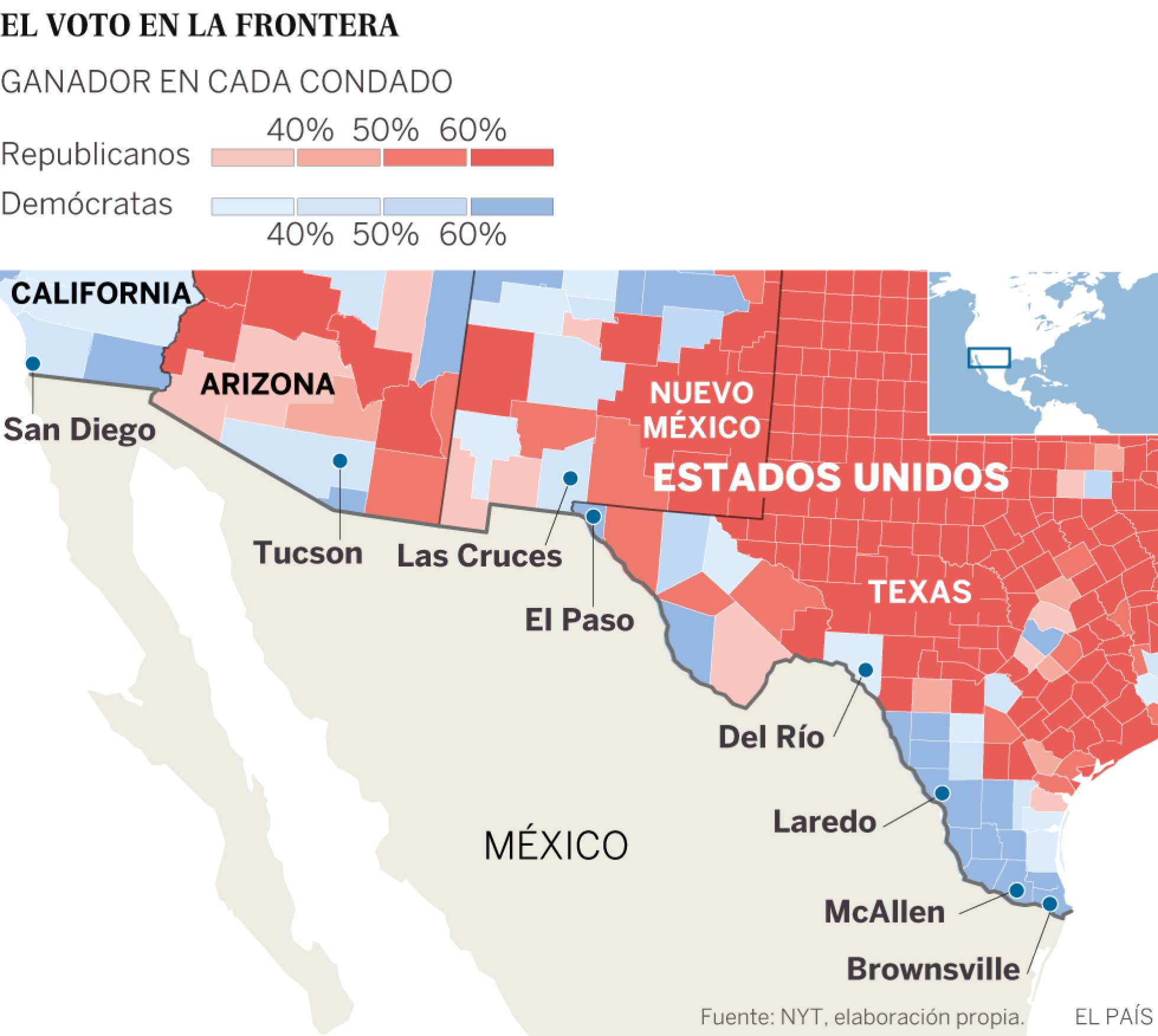
It should be noted that several Republican groups are opposed to the conservative anti-immigrant movement for economic reasons. For example, agricultural associations have called for a relaxation of laws because the majority of agricultural workers are traditionally from Latin America and Mexico in particular. It should also be noted that trade with Latin America is essential, especially with Mexico. The wall thus represents an obstacle in the local historical and commercial dynamics. Businessmen also complained of the negative impact of the wall’s construction on the Rio Grande tourism industry. Pete Saenz, the mayor of Laredo, Texas, said that “it’ll be a disaster, frankly. Based on the numbers that I gave you, we’re a transportation, trade, commerce, distribution center, warehousing—so we’re a trade town” (Garcia-Navarro). Therefore, it should be emphasized that the wall inhibits regional development in the border area, which is a factor in tackling illegal immigration. This explains why the majority of cities and electoral counties voted Democrat in the 2016 presidential elections (see Figure 1 below).
Figure 1. – Electoral results on the border.
© Ximénez de Sandoval.
The reactions of Latin American governments are all in opposition to the construction of the wall. However, this shows the profound contradictions of these countries. These nations lack strategies to counter illegal migration to the United States. Of course, it is very difficult to influence or stop migratory flows, particularly when comparing the spectacular wage differentials between Latin American countries and the United States. But as long as there is a wage difference, migrants will come.
Final notes
The conservative wall project ignores that the border is dynamic. Indeed, those who are building the wall forget that residents near the border have family, historical, and trade ties with Mexico. In this vein, Cook, the mayor of El Paso, Texas, said that “the united border does not divide our cities”. As reported by journalists, such as Laufer, and several academics, it is fundamental for the US government to work with Mexico to control the border. In this way, the United States can effectively fight against crime problems. Other mayors have also opposed the wall project, calling it, for example, an “offensive and damaging symbol of fear and division”. The Tucson City Council voted on a resolution opposing the proposed border wall that was at the core of President Donald Trump’s campaign for office. The vote took place the same day that the Pima County Board of Supervisors also passed a resolution opposing the border wall.
We do not suggest the need to eradicate the border, nor the right of American politicians to implement border security. However, we have noted an exaggerated discourse of fear that does not match reality. Even though it may be a stereotype, the transnational communities are confronted with the political struggles and the social exclusion of which this wall is proof. It fosters a negative view of Mexico and Latin America as a whole.
The erection of the wall is presented as a panacea for immigration problems. Indeed, the wall is modelled as a solution to curb illegal immigration, enhance national security, and stop the influx of narcotics. The wall will not solve any of these problems. Immigration continues, according to official police data, and drug trafficking has not decreased. The security justification has no real foundation and border security is not easily separated from local governance. The wall represents an obstacle for the regional development of the border area and prevents setting up effective policies against illegal immigration. Moreover, the wall does not guarantee the security of the border. Opponents to the wall emphasize the need to secure the border effectively to avoid arms trafficking and to prevent the passage of migrants. However, migrants will come and their survival is at stake.
We saw that Trump was not the first instigator of the nativist narrative. However, he used it opportunistically in order to get elected. Now that it has become a White House policy, its contradictions must be addressed. That is why immigration specialists and even some conservative political analysts have objected to the need of the wall. It is far from being an activist claim. We saw that the wall has been a conservative project for the last 30 years, with Trump recently adopting it as a populist party line. Trump insisted on presenting the wall as the solution to all problems: This mirage was one of the campaign symbols and one of the slogans most used by his enthusiastic supporters. However, Trump went further when he asked, and is still asking, that Mexico pay for the construction of the wall. This is evidence of imperial power because it is illegal to force a country to such a financial obligation, estimated at $12 billion.
New evidence has shown that Trump seems to acknowledge that his threats to make Mexico pay have left him politically cornered. It suggests that Trump realizes that his demand was unrealistic, but he continues to uphold it in order to avoid the political cost of campaigning on it (Miller et al.). Nobel economics laureate Krugman even ridiculed “President Trump’s insecure ego” and his campaign proposal to impose tariffs on Mexico to pay the wall (Krugman).
However, the wall is a symbolic way to humiliate those he considers responsible for all of America’s problems. As a man without ideology or political principles, Trump changed his position on many campaign topics as president, so it is difficult to predict how far he supports this idea. Nevertheless, he already broke relations with Mexico and transformed the Republican Party, as it adopted the political demand for the wall.
The border wall is rather a symbol of the deep economic and social gap between North and South. The wall also evinces a rich country’s reluctance to coexist and cooperate with other countries. This wall, however, does not stop the construction of the identities on both sides of the border, always in mutation and transformation. Thus, the wall illustrates, in a clear way, the exclusion and rejection of the other.